ciriacolimongelli@gmail.com
[DE]
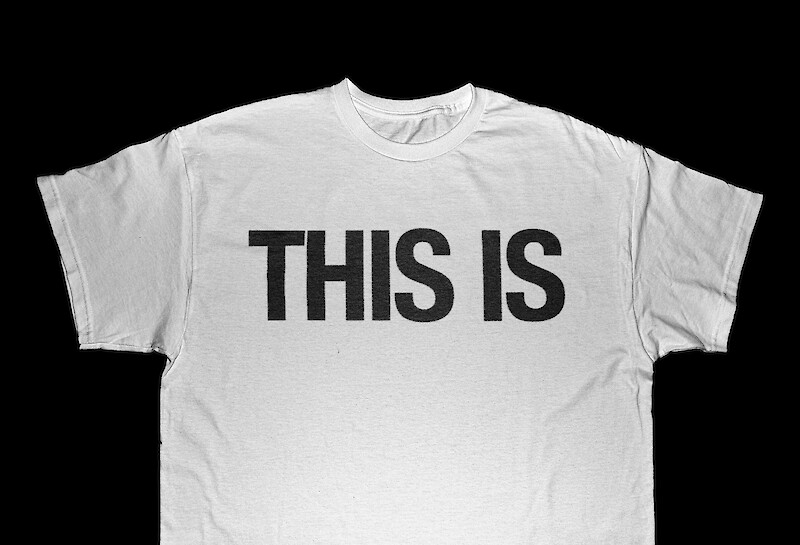
Ob «I love NY» oder «Protect the dolls»: Kaum ein Kleidungsstück macht die Kommunikationskraft von Mode so sichtbar wie das Statement-Shirt. Es begegnet uns auf der Strasse, dem roten Teppich und im eigenen Kleiderschrank. Seine Botschaften sind oft aus ihrem ursprünglichen Kontext gelöst und durch Referenzen, Ironie und rhetorische Mittel geprägt. Doch wie viel lässt sich am T-Shirt als Medium tatsächlich ablesen? Und inwiefern leistet es das, woran verbale Kommunikation scheitert?
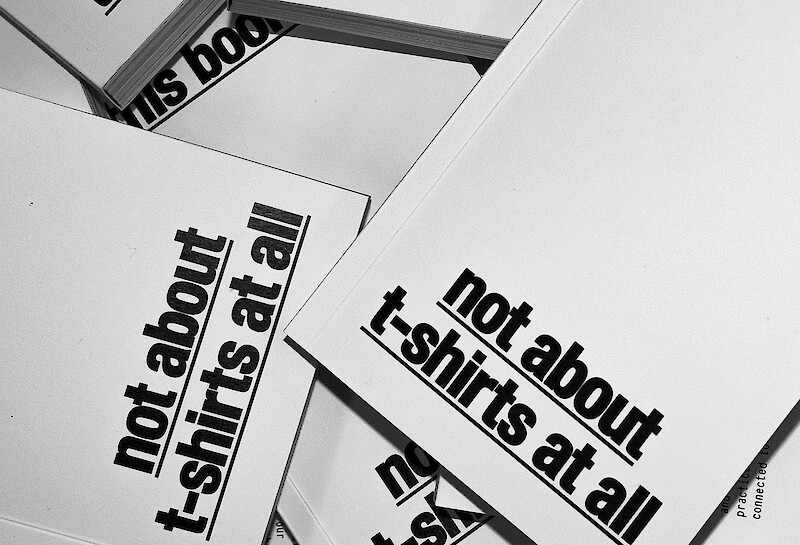
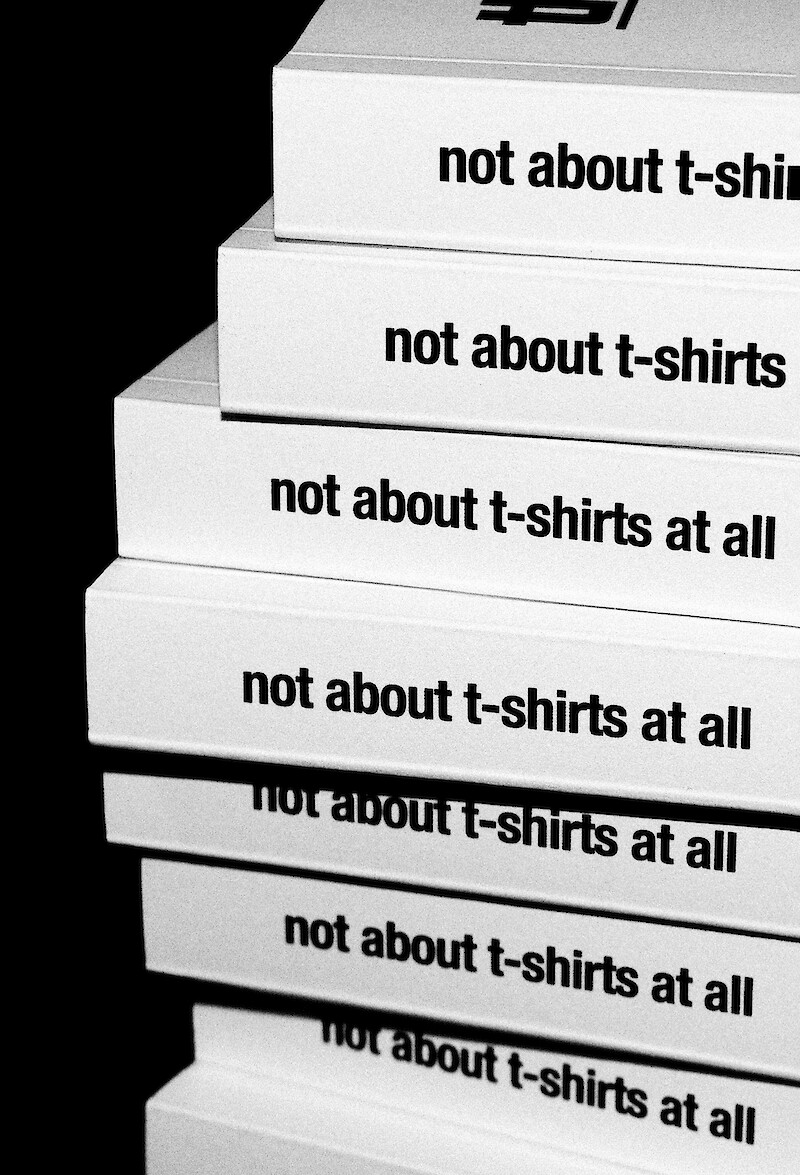
Die Publikation Not About T-Shirts At All skizziert anhand kurzer Beiträge, Bilder, Essays und Interviews die popkulturelle Bedeutung jener Kommentare, die den Brustkorb zieren. Sie kontextualisiert textile Fragmente unserer visuellen Kultur und beleuchtet, was passiert, wenn Worte nicht gesagt, sondern getragen werden: wenn Sprache auf den Körper wandert, offen für alle zur Schau gestellt und meist doch nur für wenige lesbar.
[EN]
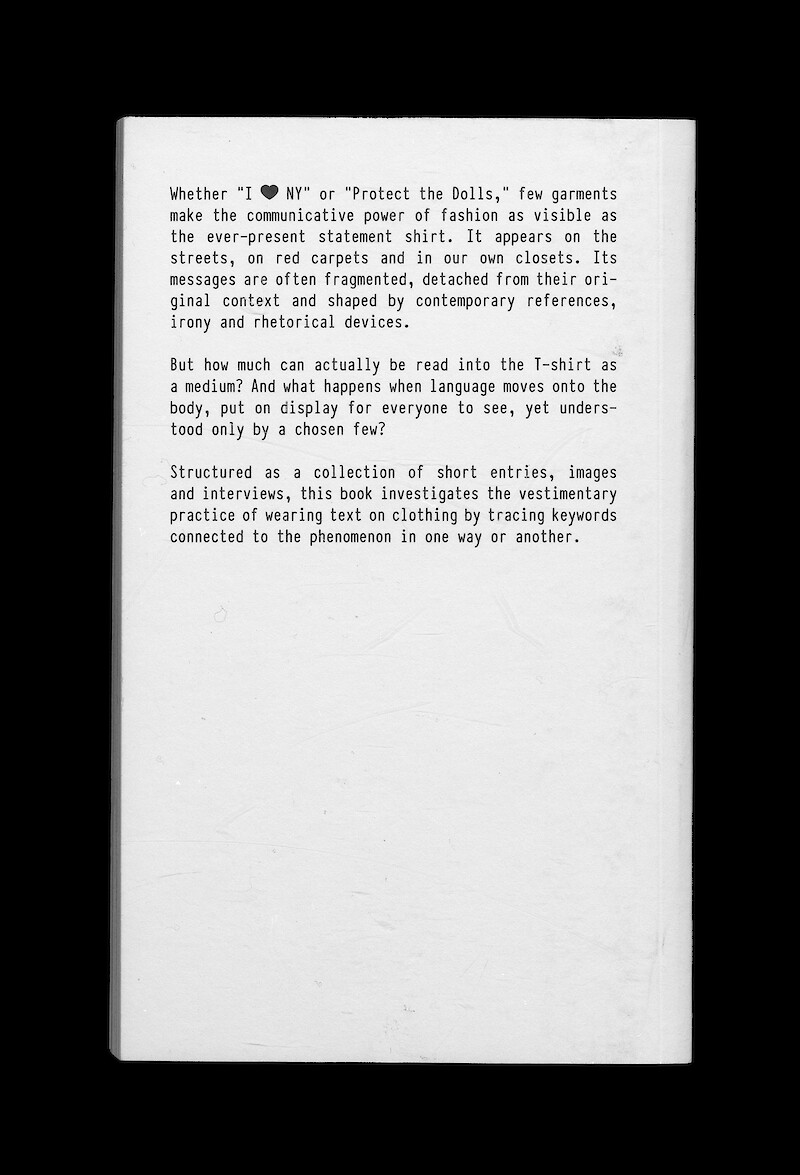
Whether the slogan is ‘I love NY’ or ‘Protect the dolls’, few garments make the communicative power of fashion as visible as the statement T-shirt. It appears on the street, on the red carpet and in our own wardrobes. Its messages are often detached from their original context and shaped by references, irony and rhetorical devices. But how much can actually be read into the T-shirt as a medium? And to what extent does it succeed where verbal communication fails?
Using short texts, images, essays and interviews, the publication Not About T-Shirts At All explores the pop-cultural significance of the comments worn across the chest. It contextualises these textile fragments of our visual culture and examines what happens when words are no longer spoken but worn: when language moves onto the body, openly displayed for everyone to see, yet often only legible to a few.
“I think it reflects where we are as a society. We are in a fragmented place. Social media and constant scrolling fragment messages all the time. Perhaps it is a kind of postmodernism again, a bricolage of times, styles and ideas, often existing outside of context.”
Dennis Nothdruft, on the fragmentary language of contemporary fashion

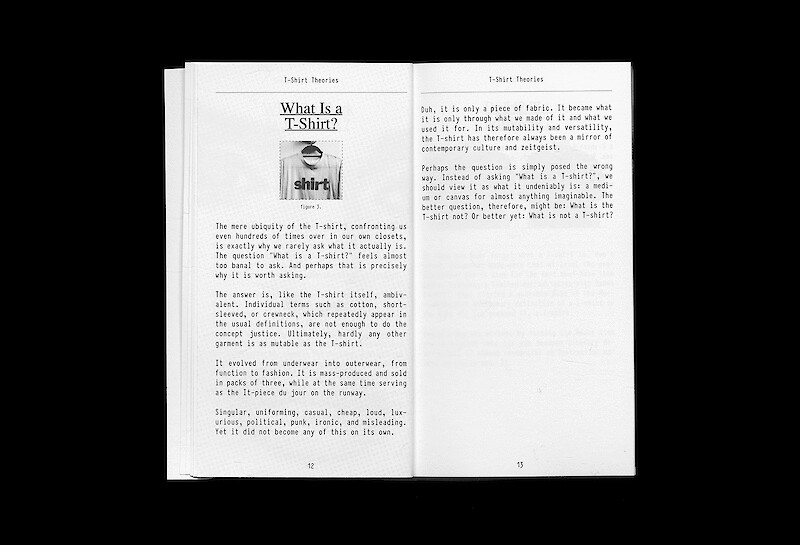
More than any other garment, the T-shirt has become the most common surface for language, a textile page worn on the body. Yet even before it was printed with letters, slogans, and descriptions, its very name, with a single Latin letter standing before it, had already predisposed it to function as a medium for text. After all, we do not simply speak of a shirt but of a T-shirt. (p. 17)
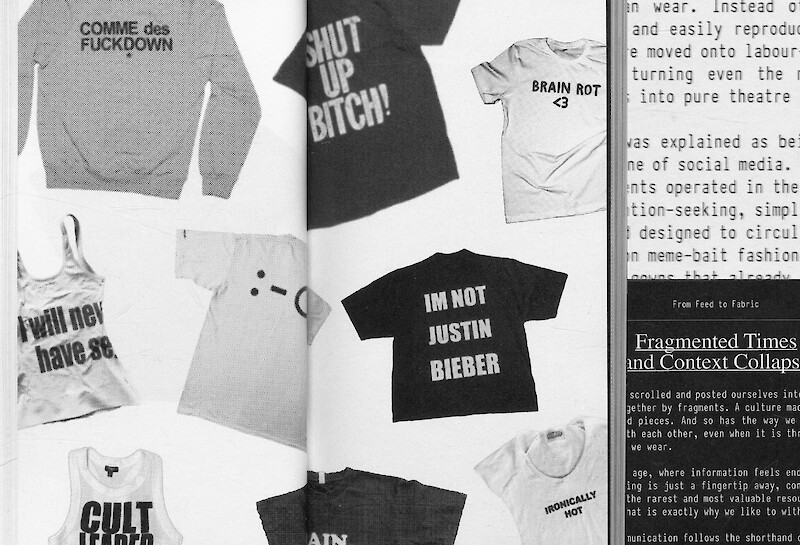
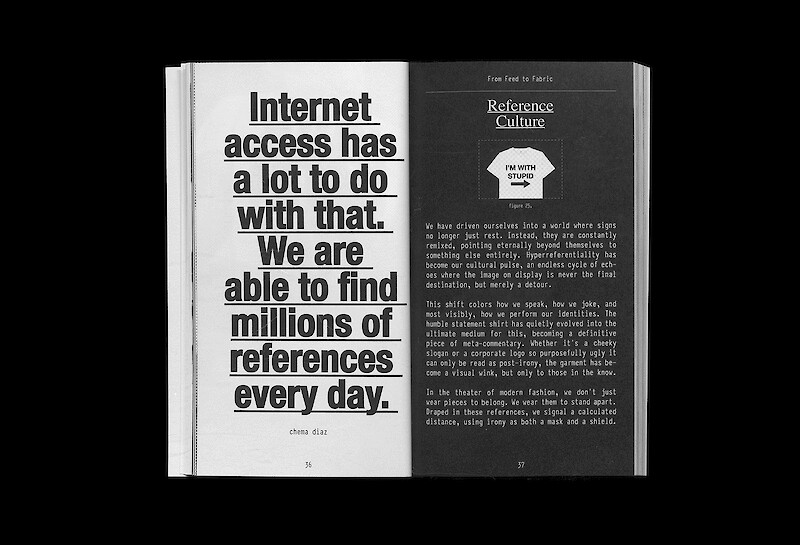
“References on references. Internet access has a lot to do with that. We are able to find millions of references every day.”
Chema Diaz, on hyperreferentiality


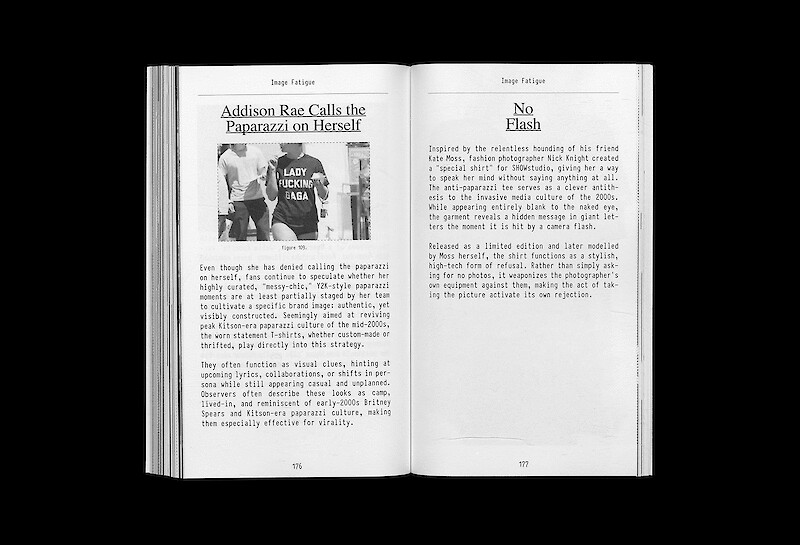
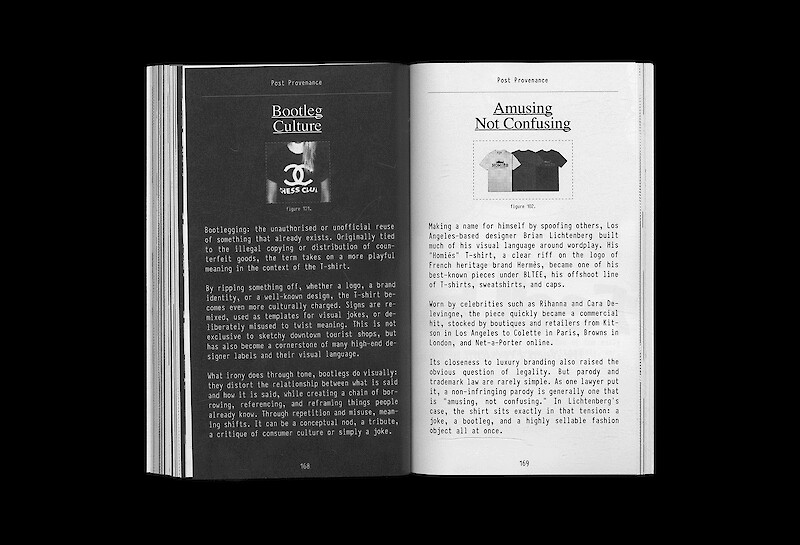
What the “T” is to the shirt, the “statement” is to fashion. No garment is exempt from the fact that, whether you like it or not, it conveys a message to the world. We subconsciously make statements all the time. The moment we pull something out of our closet, we declare our bodies a medium for meaning. (P. 26)
“When something is slightly cryptic, it invites participation. It asks the viewer to think, research, and connect the dots.”
Ashish Gupta, on fashion as code